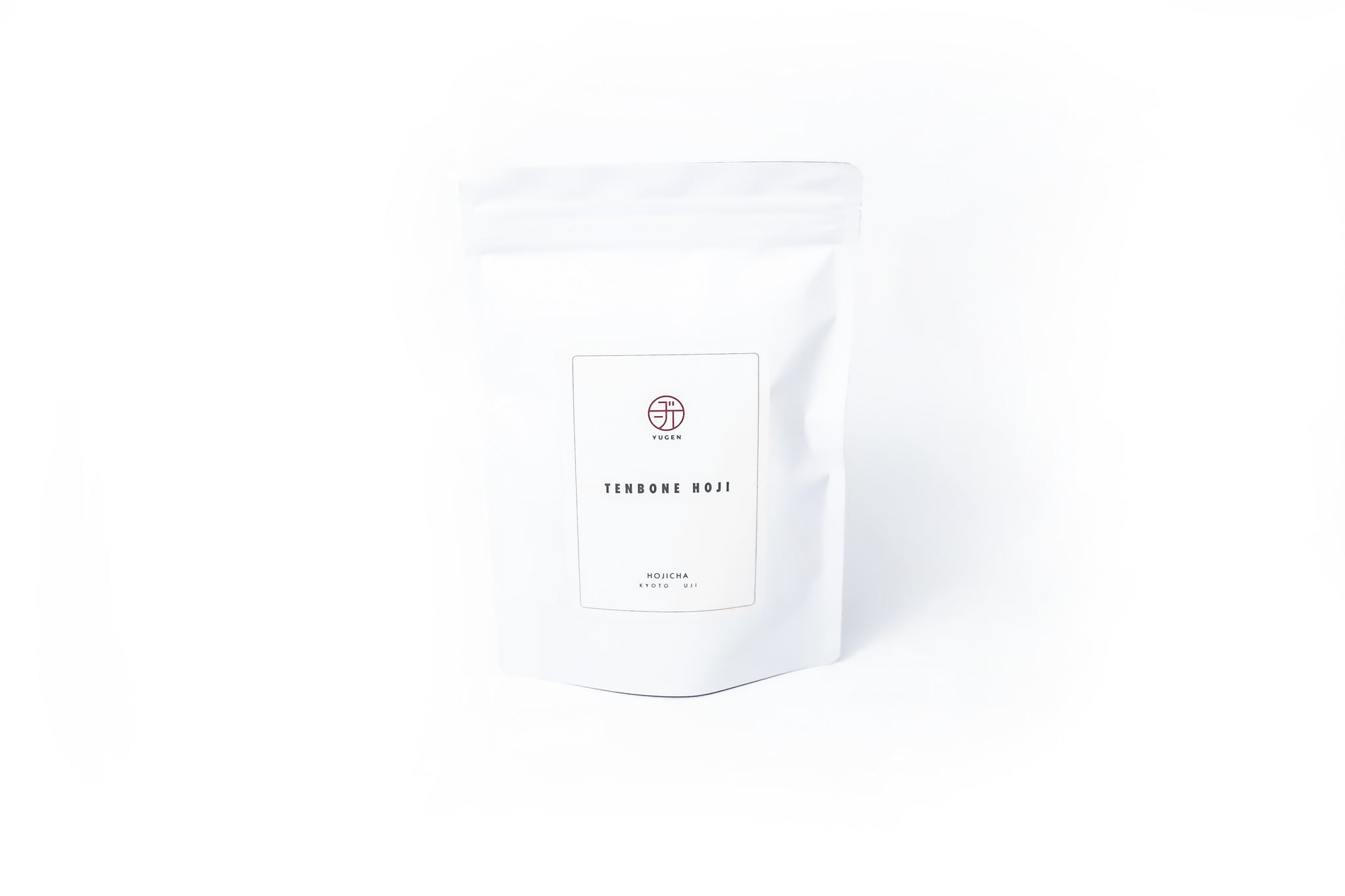
Tembone Hojicha (Uji, Kyoto)
Kyoto Uji | Tembone Hojicha
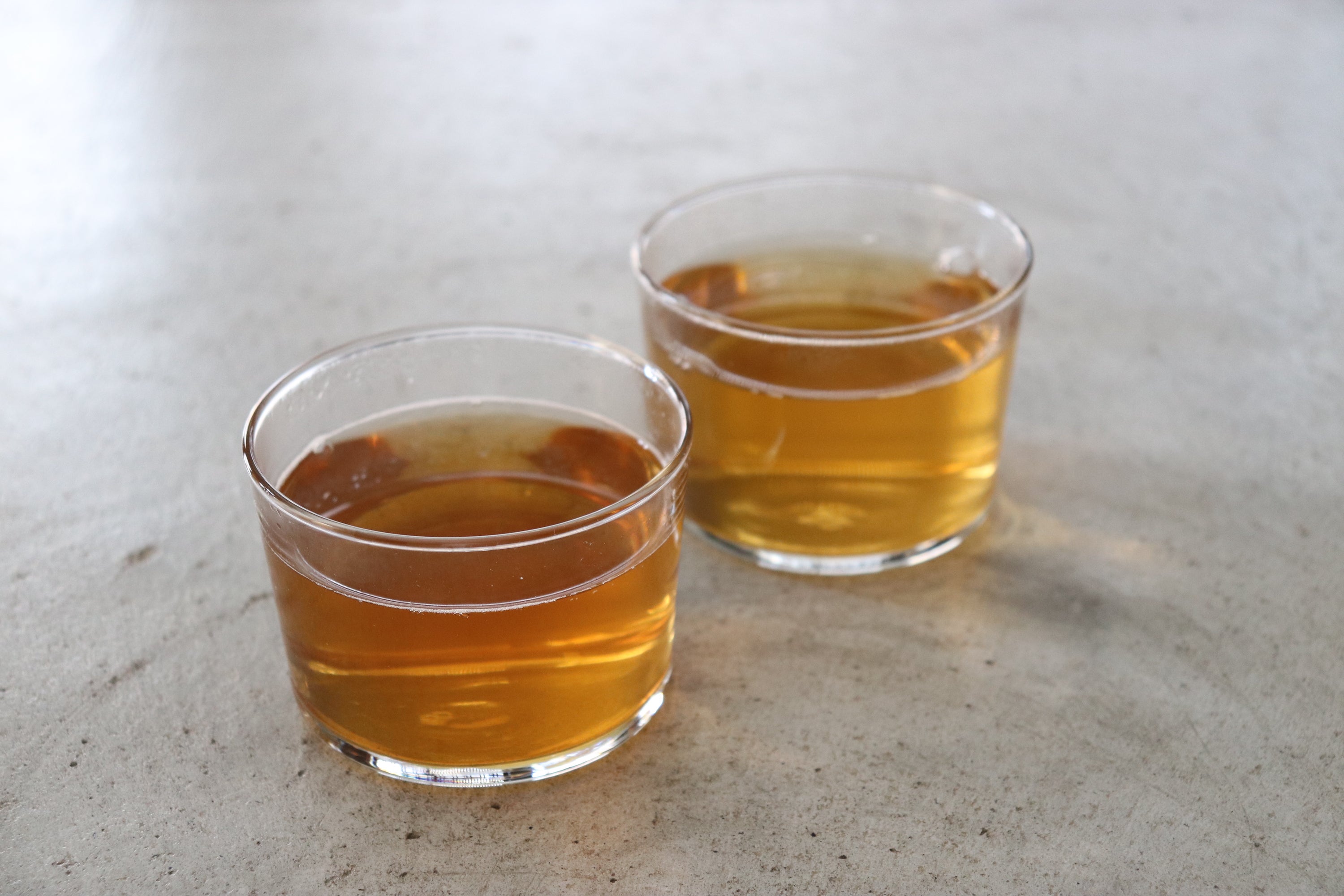
Color of tea water Left: 1st brew Right: 2nd brew
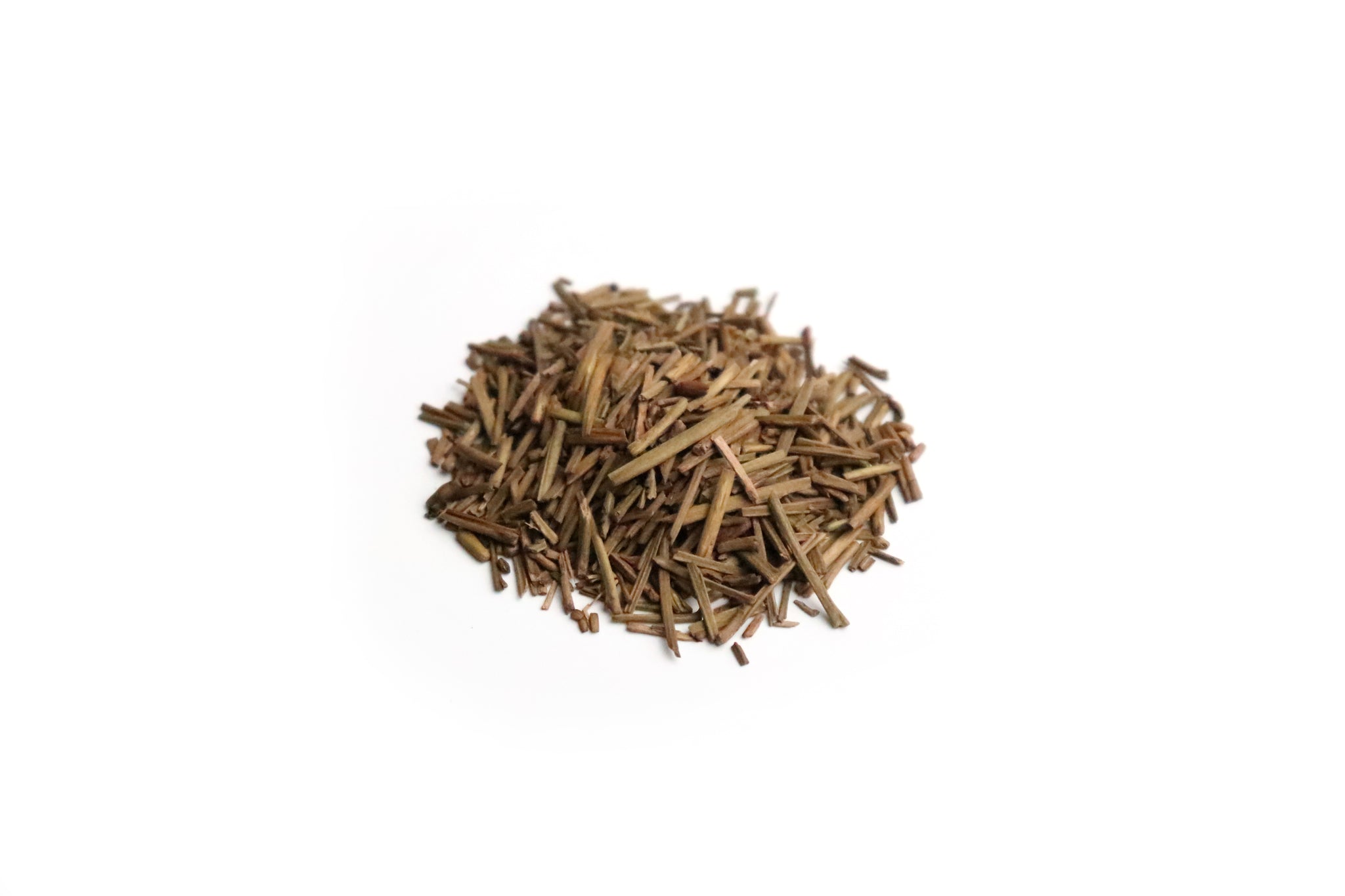
"Tembone Hojicha" is made by roasting the stalks of the finest hand-picked tencha grown in Uji. For this reason, it is a very rare hojicha that not only has the fragrant aroma of roasted tea, but also the umami and sweetness of tencha, which is the raw material of matcha.
Hand-picking the finest leaves by eye for high-grade matcha—work long done by the "tsumi-ko," the women who pick the tea—is hard, low-paid labor, and fewer and fewer people take it on. What caught the eye of YUGEN's owner were the tencha stems, which were always thrown away. Other regions make hojicha from stems, but in Kyoto, hojicha was mostly bancha made by roasting autumn leaves.
When we tried roasting the stems of hand-picked, high-grade tencha, we found them delicious: fragrant, mellow, and full of umami.
It seemed a waste that something this good was being discarded. And if the stems could become a product, a little more could go back to the growers and the pickers. That is why we have made this hojicha since the day we opened.
Enjoy a special hojicha that you can't taste anywhere else.
It is highly recommended to enjoy it as a cold tea.
"Tencha"
Raw material for matcha.
The tea leaves are cultivated in almost the same way as gyokuro. For about 20 days before harvest, the entire tea plantation is covered to block direct sunlight. The cultivation method suppresses catechins and produces theanine, a flavor component. After the tea leaves are harvested, they are steamed and dried without being kneaded to become tencha.
The name "Tembone" comes from tencha, the leaf used for matcha, and from the stems themselves, which look like little bones: ten from tencha, bone from the Japanese word for bone.
【 Notice & Storage Instructions 】
・Store unopened tea in a cool, dark place away from direct sunlight, heat, and humidity. For extended storage, keep it sealed, freeze, and let it return to room temperature before opening.
・After opening, place the tea in an airtight, opaque container and keep it in a cool, dark place. For best quality, enjoy as soon as possible, ideally within one month.
・Avoid storing near strongly scented items, as tea easily absorbs odors.
Choose options
How to Brew Delicious Tea🍵🍃
【 Basic Measurements 】
・For 1 serving : 4-6g tea leaves / 100ml hot water
◆ First Brew
Water temperature : 50°C
Steeping time : 2 minutes
Point : Brewing slowly at a low temperature results in almost no bitterness or astringency, allowing the deep umami flavor to shine through.
◆ Second Brew
Water temperature : 60°C
Steeping time : 30 seconds
Point : Slightly increasing the temperature brings out a new layer of aroma and mild astringency, along with a gentle umami taste distinct from the first brew.
→UJIHIKARI (Gyokuro / Kyoto)
【 Basic Measurements 】
・For 1-2 servings : 5g tea leaves / 160ml hot water
・For 3-4 servings : 8g tea leaves / 300ml hot water
◆ First Brew
Water temperature : 85°C
Steeping time : 90 seconds
Point : Enjoy the signature aroma of sencha along with a refreshing bitterness and astringency, balanced by a gentle umami and subtle sweetness.
◆ Second Brew
Water temperature : 85°C
Steeping time : 20-30 seconds
Point : Slightly increasing the temperature enhances the astringency, offering a lighter, more refreshing taste compared to the first infusion.
◆ Third Brew
Water temperature : 95-100°C
Steeping time : 10 seconds
Point : A short steep with boiling water brings out a soft bitterness and astringency, creating a clean, mellow finish.
【 Basic Measurements 】
・For 1-2 servings : 5-6g tea leaves / 160ml hot water
・For 3-4 servings : 8-10g tea leaves / 300ml hot water
◆ First Brew
Water temperature : 65°C
Steeping time : 90 seconds
Point : Brewing at a lower temperature reduces bitterness and astringency, allowing you to fully enjoy kabusecha’s signature “covered aroma” (ooika) and its rich umami flavor.
◆ Second Brew
Water temperature : 85°C
Steeping time : 20-30 seconds
Point : Using hotter water brings out a slightly more astringent profile, offering a new dimension of flavor compared to the first brew.
◆ Third Brew
Water temperature : 95-100°C
Steeping time : 10 seconds
Point : A quick steep with boiling water draws out a gentle bitterness and clean astringency for a refreshing finish.
→GOKO (Kabuse Sencha / Kyoto)